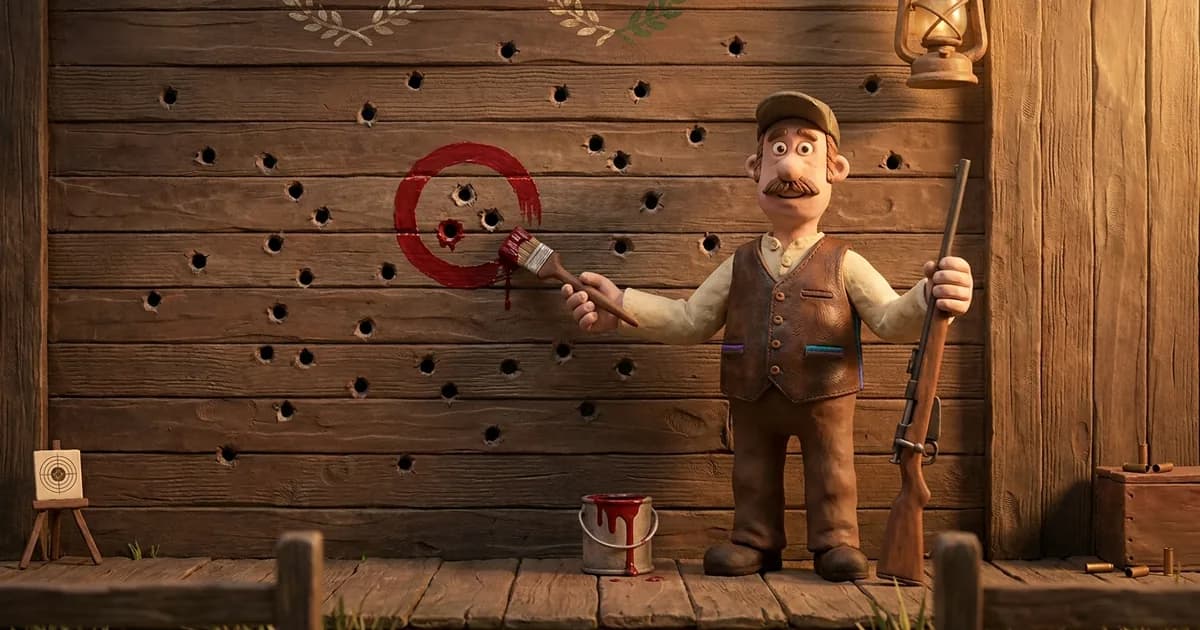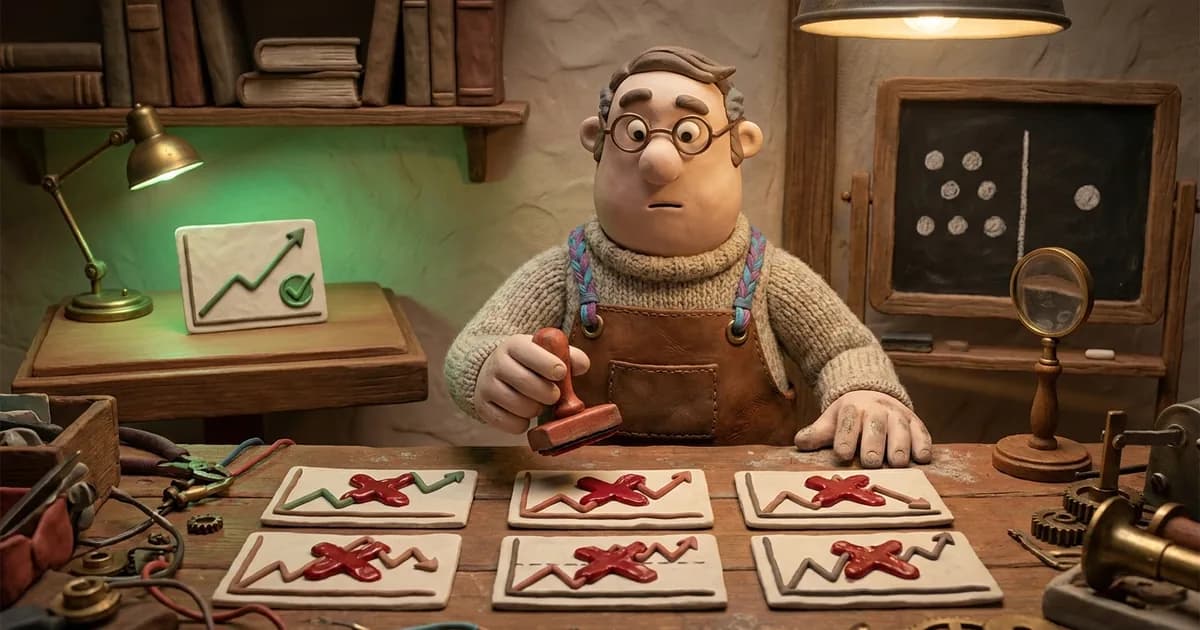
It's September 16, 1992. A man in a New York office is about to break the Bank of England.
His name is Stanley Druckenmiller. He is 39 years old. He runs George Soros's Quantum Fund. And today, he will execute what financial historians call "the trade of the century."
By midnight, the British government will have capitulated. The pound will have collapsed. Quantum Fund will be richer by over a billion dollars.
Druckenmiller will become a legend.
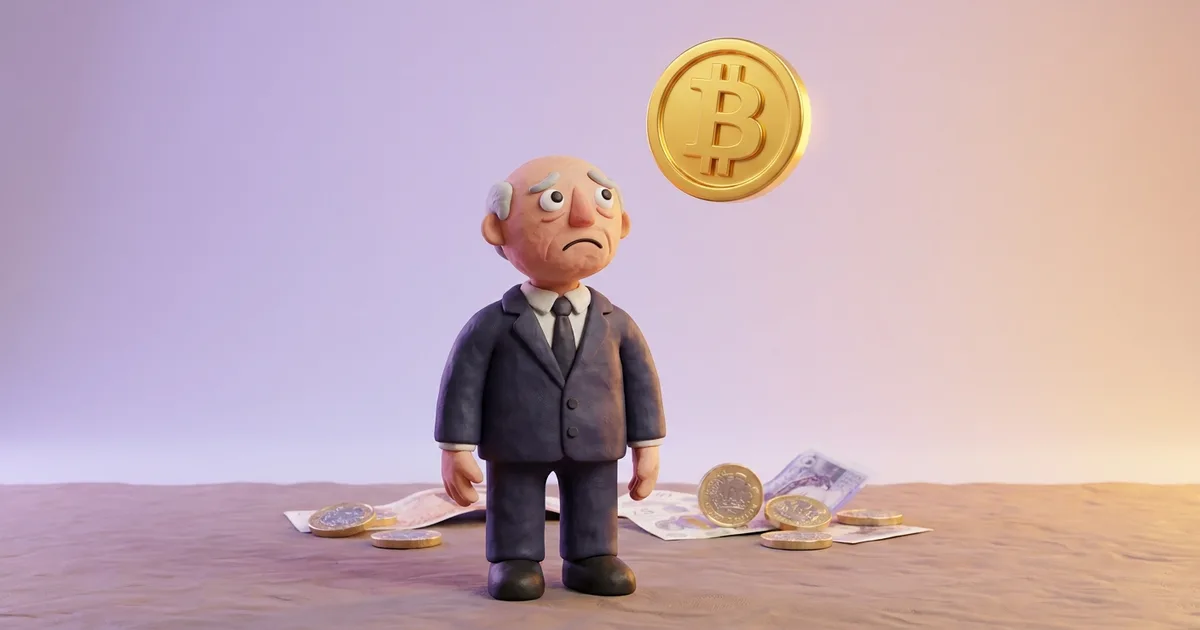
30 years later, the same man will look at his phone, see Bitcoin at $6,200, and do nothing.
Then he will watch it climb to $17,000.
Then $40,000.
Then $69,000.
And he will say, in a live TV interview, the most honest sentence a billionaire has ever said on financial television:
"I felt like a moron."
This is the story of how the greatest macro trader alive made the same mistake twice. And what it teaches you about every major decision you'll ever make in crypto.
The Setup: A Man Who Doesn't Miss
First, you need to understand who Druckenmiller is.
Between 1988 and 2000, he ran Quantum Fund for George Soros. 12 years. Not a single losing year. Average annual return: roughly 30%. Let that sink in. The S&P 500 returned about 16% over the same period. Druckenmiller nearly doubled it. Every year. For 12 years straight.
In 1992, he spots the trade of a lifetime. The British pound is artificially pegged to the German mark. The numbers don't add up. Britain is hemorrhaging reserves trying to defend the peg. The system is broken.
Druckenmiller walks into Soros's office. He proposes shorting 100% of the fund against the pound.
Soros looks at him. "If the story is this good, why are you only doing 100%? Do 200%."
They leverage up. They short massively. They wait.
On September 16, the Bank of England raises interest rates from 10% to 12%, then promises 15% by nightfall. It's a desperate signal to currency markets. Hold the line, they're saying. Don't bet against us.
Druckenmiller and Soros don't blink. They press harder.
By 7 PM, it's over. The British government withdraws from the European Exchange Rate Mechanism. The pound collapses. Quantum Fund pockets over a billion dollars in a single day.
The lesson Druckenmiller takes from this: When you have high conviction, bet big. The greatest investors don't diversify. They concentrate.
Remember this lesson. It's about to destroy him.
The First Mistake: The Dot-Com Fever
Fast forward to 1999. Tech stocks are going insane. Yahoo, AOL, Pets.com, Webvan. Everyone is getting rich. Druckenmiller watches from the sidelines, skeptical.
Too skeptical, as it turns out.
In February 1999, he does what every experienced investor does when they see a bubble: he shorts it. $200 million worth of tech stocks, betting they'll crash.
Six weeks later, he's down $600 million. The bubble kept inflating. He's forced to cover his shorts at a massive loss.
So he reverses. He buys the tech stocks. Rides them up. By the end of 1999, Quantum Fund is up huge. Druckenmiller has made billions.
Now comes January 2000. Druckenmiller walks into Soros's office. "I'm selling everything. This is crazy. These valuations are insane."
Soros agrees. "I'm really glad you're doing it."
Druckenmiller sells. The smart move. The disciplined move. The right move.
And then, for two months, he watches other traders at the fund keep making money. Young hotshots at Quantum who don't know any better. They're riding the final euphoric wave. Making 3% per day. Their little account is up 50% for the year.
While Druckenmiller sits on the sidelines.
Something inside him breaks.
In March 2000 — weeks before the Nasdaq peak — he buys back in. $6 billion worth of tech stocks. At the top.
Six weeks later, he has lost $3 billion.
On April 28, 2000, Soros holds a press conference. Quantum Fund is down 22%. Druckenmiller is leaving.
The man who broke the Bank of England. The man with 12 straight winning years. The man who knew better than anyone that this was a bubble.
He bought the top.
Why?
His own explanation, years later, in an interview that should be required viewing for every trader alive:
"I ended up losing $3 billion on that trade alone. It was all because I got emotional and dropped every tool of discipline I've ever had."
Read that sentence again. This is not a rookie. This is the best macro trader of his generation. And he admits he lost $3 billion because he got emotional.
Remember: When the best trader alive can be moved by FOMO to buy a generational top, so can you. There is no skill level at which emotions stop mattering.
The Second Mistake: Bitcoin
Now we skip ahead 20 years. November 2020.
Druckenmiller is 67. A legend. Managing his own family office. He has seen everything.
Bitcoin is at $14,000.
For years, he had dismissed it. "Crypto and Bitcoin are a solution in search of a problem," he said in 2018.
But now, COVID has arrived. The Fed is printing dollars at a rate nobody has seen before. Jerome Powell has turned the money printer into a firehose.
Druckenmiller looks at Bitcoin again. And something clicks.
"I found the problem," he says on CNBC. "Jay Powell and the world's central bankers."
He discloses on live TV that he owns Bitcoin.
Here is the crucial detail, and it's the one that makes this story unbearable:
Druckenmiller had decided to buy $100 million worth of Bitcoin. At around $6,200.
He tried. For two weeks.
He could only buy $20 million. At around $6,500.
The market was so thin that his attempt to buy moved the price. He gave up after getting less than a quarter of his intended position.
Then he sold.
He took "some costs and then some" out of his small Bitcoin position, according to his own account. He sold long before Bitcoin hit $69,000 in November 2021.
Then he watched.
He watched the price climb from $6,500 to $14,000. Then $20,000. Then $40,000. Then $69,000.
A 10x move on the position he couldn't build. A 10x move on the position he sold early.
In October 2023, on a podcast, at 70 years old, one of the greatest investors in history says the quiet part out loud:
"For the first move in Bitcoin from $50 to $17,000, I wanted to buy it every day. And even though I didn't think much of it, I just couldn't stand the fact that it was going up and I didn't own it. I felt like a moron."
"To be honest, I don't hold any Bitcoin. But I really should."
The best trader of his generation. Missing Bitcoin. Again. 23 years after missing the dot-com bottom.
Same mistake. Different asset.
The Pattern
Look at both stories side by side.
Dot-Com Bubble:
- Correctly identified the bubble
- Correctly sold at the right time
- Watched others make money
- Broke. Bought the top.
- Lost $3 billion.
Bitcoin:
- Correctly identified the opportunity
- Bought a small position
- Got shaken out by market thinness
- Watched others get rich
- Said "I felt like a moron"
- Never fully got back in
The common thread is not the specific asset. It's not the market conditions. It's not even the decision-making framework.
It's the inability to sit still while others get rich.
Druckenmiller had the information. He had the analysis. He had the conviction. What he lacked, in both cases, was the psychological capacity to watch other people profit while he stayed disciplined.
In 2000, that inability cost him $3 billion and his reputation at Soros.
In 2020, it cost him a 10x position in Bitcoin.
What This Means for You
You are not Stanley Druckenmiller. You don't run a hedge fund. You don't have billions in capital.
But you have the exact same brain.
Every time Bitcoin runs without you, your amygdala fires the same neurons that fired in Druckenmiller's head in March 2000. The voice that said "you're falling behind, you need to get in NOW" is the same voice.
The difference is: Druckenmiller caught himself. He analyzed his mistake. He spoke about it publicly. He warned people.
Most retail traders never do that. They just repeat the cycle, every bull market, buying at the top, selling at the bottom, and blaming the market.
The lesson is not "you need to be smarter than Druckenmiller." That's impossible. Druckenmiller is smarter than both of us combined.
The lesson is: if the best macro trader alive can be broken by FOMO, you need a system that doesn't rely on your willpower.
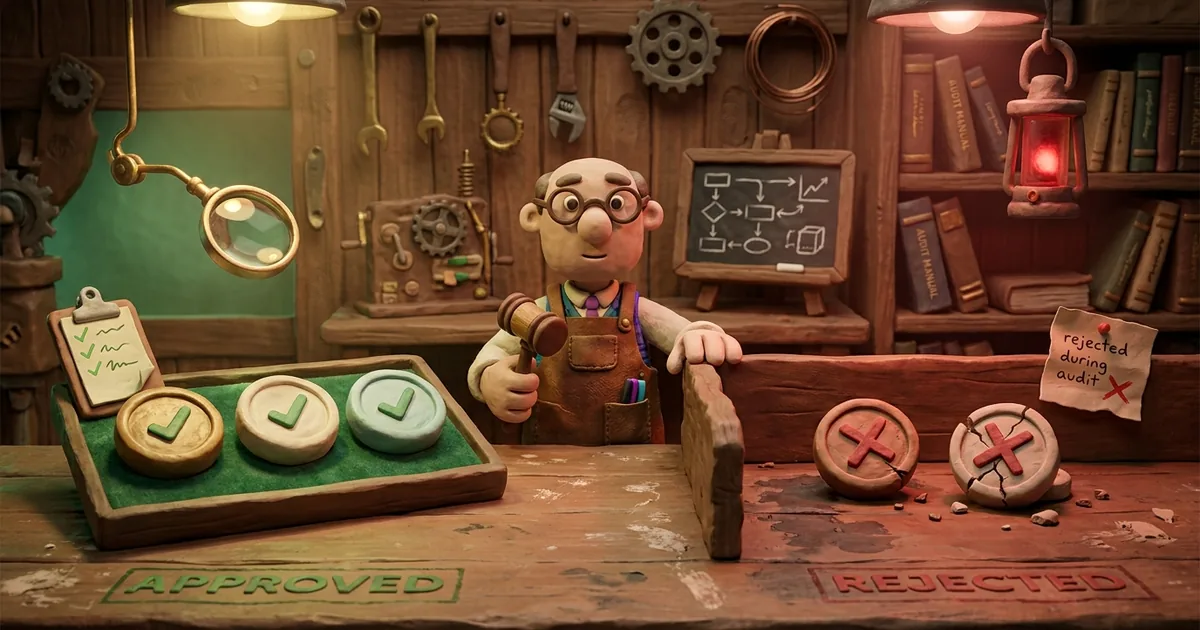
This is exactly why we built the BotLab. Rules that fire without asking your feelings. Strategies that don't care if others are getting rich.
Because the data is clear: your brain will betray you at exactly the wrong moment.
Druckenmiller's will. And your will.
The only question is: do you have a system that will save you from yourself?
The Epilogue
In 2025, at 72 years old, in a conversation on a podcast, Druckenmiller was asked what he'd learned from the dot-com mistake.
His answer:
"I didn't learn anything. I already knew I wasn't supposed to do that."
Think about that sentence. The greatest trader alive knew the rule. Knew he was breaking it. Broke it anyway. Lost $3 billion. And decades later, when asked what he learned, his answer was: nothing new.
The knowledge was already there. What was missing was the execution.
That's the whole game. Not knowledge. Execution.
Your strategy doesn't need to be genius. It needs to be followed, even when every cell in your body is screaming at you to abandon it.
The best traders in history couldn't do it reliably.
A simple bot can.
-> The BotLab — 23 experiments running right now
-> Meet our live bots that trade without emotions
-> Why your "winning" strategy is probably losing
Your Dominic, the guy who built bots so he wouldn't have to be Stanley Druckenmiller at 3 AM.
Sources
- Stan Druckenmiller's Worst Mistake Ever — Novel Investor
- Stanley Druckenmiller's big mistake — Yahoo Finance
- Stanley Druckenmiller: Breaking the Bank — Quartr Insights
- The Trade of the Century: When George Soros Broke the British Pound — Priceonomics
- Stanley Druckenmiller — Wikipedia
- "I felt like a moron" — CryptoSlate
- Druckenmiller says he owns Bitcoin — CoinDesk, Nov 2020
- Billionaire Investor Druckenmiller on Bitcoin — Benzinga, Oct 2023
Disclaimer: This is not financial advice. Past performance does not guarantee future results. This article uses public statements and financial records of Stanley Druckenmiller for educational purposes.