A different friend. Same Sunday afternoon ritual.
WhatsApp screenshot. Green numbers. A memecoin up 4x in fourteen days. $10,000 turned into $40,000. Rocket emoji. The caption was one word: "FINALLY."
He wanted me to tell him he was a genius.
I typed back one question.
"How much total have you deposited into that wallet over the last 30 days?"
Typing indicator. Long pause. Two minutes later: "So I put in $28,000 across twelve token plays this month."
Another minute.
"And the current balance is... $15,400."
He was quiet. Then: "Yeah but look at THIS one though."
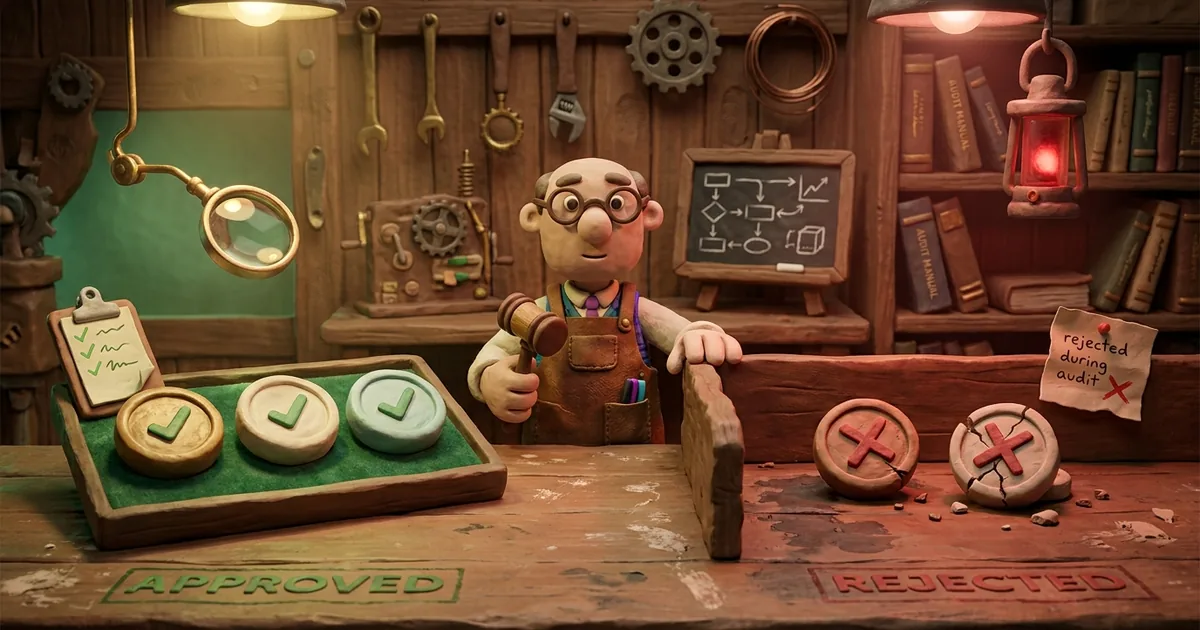
The 4x screenshot was real. That trade ran. The eleven others were also real. Nine of them were down 70% or more. Two got rugged outright. His actual thirty-day P&L was -45%.
And yet the thing he wanted to show me on a Sunday afternoon was the one green line. Not the ten red ones. Not the balance that went from $28,000 to $15,400.
That one.
This is a specific cognitive bug. It has a name. A fifty-year academic paper trail. And it explains more retail crypto behavior than almost any other single mechanism I've found.
Part I of this series argued the labor cost is the first hidden tax on active trading. Dollars per hour. The number the industry doesn't want you to run.
This is Part II. The second hidden tax is psychological.
And you pay it even when you're not actively trading.
The Bias Has a Name
It's called present bias. The formal mechanism behind it is called hyperbolic discounting.
Here's the short version.
Your brain does not value future rewards in a straight line. A dollar in a year is not worth 95 cents. In the empirical data, it's closer to 50 cents. A dollar in eight years is worth pennies.
Economists assumed for decades that humans discount the future exponentially. Steady rate, clean curve. Then Richard Thaler ran a survey in 1981 asking people what amount, received at various future horizons, they'd consider equivalent to $15 today. For a reward one month away, the implied annualized discount rate came back around 345%.
For the same question over ten years, the implied rate dropped to 19%.
That's not one discount rate. That's two completely different people inside the same head.
Close in time: impatient to the point of irrationality. Far in time: almost reasonable.
The curve that connects those two points is not a straight line. It's a hockey stick. Hyperbolic.
George Loewenstein and Drazen Prelec formalized the whole anomaly set in 1992. David Laibson turned it into a clean mathematical model in 1997, the quasi-hyperbolic beta-delta model most modern behavioral-econ papers still use. Shane Frederick, Loewenstein, and Ted O'Donoghue wrote the canonical review in 2002.
Fifty years of evidence. Robust across cultures, ages, incomes.
Your brain is built this way. Not because you're weak. Because evolution shaped a creature that needed calories this afternoon more than it needed calories next spring.
The problem: crypto markets, memecoin casinos, and 100x perpetuals are engineered to exploit the part of your brain that thinks in "this afternoon."
The setup: Your brain discounts future rewards on a hockey stick, not a straight line. Close rewards get disproportionate weight. Far rewards get hammered. This is not a character flaw. It's wiring. And the crypto industry knows exactly how to press that button.
The Discount Curve, Made Concrete
Let me show you the numbers directly.
Here's a simplified hyperbolic discount function. The math: subjective value = actual value / (1 + k times time), where k is the impatience coefficient.
I'll use k = 0.5 per week. That's at the impulsive end of the range documented in the Frederick-Loewenstein-O'Donoghue review. Typical general-population estimates run lower, but the impulsive-retail-trader subpopulation we're describing here lives much closer to this end of the curve.
| Time to reward | Hyperbolic weight | What $40,000 subjectively feels like |
|---|---|---|
| Now (today) | 1.000 | $40,000 |
| 1 week away | 0.666 | $26,640 |
| 1 month (~4 weeks) | 0.333 | $13,320 |
| 6 months (~26 weeks) | 0.071 | $2,840 |
| 1 year (52 weeks) | 0.037 | $1,480 |
| 3 years | 0.013 | $520 |
| 8 years (~416 weeks) | 0.005 | $200 |
Look at that last row.
A reward of $40,000 arriving eight years from now subjectively feels like $200 to the present-biased brain.
Not $40,000. Not $20,000. Two hundred dollars.
Your brain is not comparing $40,000 one week away versus a $71,573 compound gain in eight years. It's comparing $26,640 of felt-sense-immediate reward versus the felt-sense equivalent of roughly $358 eight years from now.
Of course it picks the memecoin. The comparison has already been rigged before any conscious "strategy" kicks in.
This is why "just be patient" is awful advice. It's telling someone to override hardwired neural machinery with willpower. That's not how biases work.
In dollars: A 4x memecoin one week away ($40,000 payoff) subjectively feels like $26,640 of near-immediate reward. A $71,573 compound gain over eight years subjectively feels like about $358. Your brain is comparing $26,640 versus $358. Of course the memecoin wins. In the felt-sense, it is seventy-four times more attractive than the compound.
Why Your Brain Hates the Compound Math
Here's the neuroscience angle, kept light-touch.
In 2004, Sam McClure, David Laibson, George Loewenstein, and Jonathan Cohen published a landmark fMRI study in Science. Subjects chose between smaller-sooner and larger-later monetary rewards while in a scanner. The researchers watched which brain regions lit up for which type of choice.
The result is the cleanest picture we have of what present bias is inside the skull.
Two different systems were active.
The limbic system (ventral striatum, medial prefrontal cortex) is the emotional, dopamine-driven, near-term reward machinery. It lit up for choices involving immediately available rewards. The system that wants the thing now.
The lateral prefrontal cortex and posterior parietal cortex is the deliberative, cost-benefit, planning machinery. It lit up uniformly across all intertemporal choices regardless of delay. This is the system that can think about eight years from now.
Both systems were active. Both signals were real.
The decision that came out of the subject's mouth depended on which signal was louder.
For most people most of the time, the limbic signal wins when the near reward is vivid enough.
This is why looking at the memecoin chart matters. The green candle on your phone is activating the limbic dopamine system directly. The abstract idea of a 30% CAGR over eight years has no such footprint. It's all prefrontal cortex. No limbic fire.
Your thoughtful self is holding a whiteboard diagram. Your impulsive self is holding a slot-machine lever that just paid out.
Guess which one the nervous system listens to.
This isn't metaphor. It's the actual brain circuitry, imaged by fMRI, and cited thousands of times since 2004.
Two systems. One mouth. The loudest signal wins.
In one image: Picture a whiteboard diagram of the compound curve in one corner of the room, glowing faintly. In the other corner, a slot machine mid-spin, blinking red and gold. Your brain has to pick which one to walk toward. That's it. That's the whole fight.
The Brutal Math on Two Paths
Here's what the eight-year math looks like with realistic retail numbers and no spin.
Path A: The Boring Bot.
$10,000 starting capital. 30% CAGR for eight years. Roughly the paper-validated range for the DM+LD filter on 2020-2026 data, with a discount applied for diminishing future returns. Hours per week: roughly two.
| Year | Capital (start) | +30% | End-of-year |
|---|---|---|---|
| 1 | $10,000 | $3,000 | $13,000 |
| 2 | $13,000 | $3,900 | $16,900 |
| 3 | $16,900 | $5,070 | $21,970 |
| 4 | $21,970 | $6,591 | $28,561 |
| 5 | $28,561 | $8,568 | $37,129 |
| 6 | $37,129 | $11,139 | $48,268 |
| 7 | $48,268 | $14,481 | $62,749 |
| 8 | $62,749 | $18,825 | $81,573 |
$10,000 becomes $81,573 over eight years. Minus fees. Zero panic. Zero 2 AM chart-staring.
Path B: The Memecoin Rotation.
Same $10,000 starting capital, re-deposited whenever the account goes to zero (the pattern from the opening WhatsApp anecdote). You cycle into memecoins once per month for eight years. That's 96 attempts.
What's the real base rate?
Dune Analytics pulled the numbers. CoinMarketCap covered it. Of 13.55 million Pump.fun wallets, 99.6% never realized over $10,000 in profit. Only 0.048% realized $100,000 or more. Only about 0.00217% ever cleared $1 million.
Other Dune aggregators: 60% of traders lost money outright. A full 90% either lost or made less than $100.
Let me hand you the dream. Across 96 tries, you hit one clean 10x (nobody does this, but let's steelman). You also lose 60 attempts matching the base rate. You break even on 5. Your 30 minor wins average $3k.
| Outcome | Frequency | Per attempt | Total |
|---|---|---|---|
| Full loss (-80%) | 60 | -$8,000 | -$480,000 |
| Break-even | 5 | $0 | $0 |
| Minor win | 30 | +$3,000 | +$90,000 |
| Monster 10x | 1 | +$100,000 | +$100,000 |
| Net | -$290,000 |
Even with a 10x mega-hit that only 1-in-2,500 wallets ever lands, the 96-attempt memecoin path accumulates around a quarter-million in cumulative realized losses.
Side-by-side (same starting $10,000, eight-year horizon):
| Path A (Bot) | Path B (Memecoin with mega-hit) | |
|---|---|---|
| Gain vs starting capital | +$71,573 | -$290,000 cumulative |
| Hours per week | ~2 | ~60 |
| Sleep | fine | not fine |
Path A beats Path B by $361,573 on a clean steelman. On the median retail distribution, the delta is worse.
And your brain still wants Path B.
Bottom line: The compound math beats the lottery math on 99.95% of realistic retail outcomes. Your brain ignores this because the compound math arrives in year eight while the lottery math arrives on Tuesday. Tuesday wins the neural fight nearly every time. That is present bias. That is the tax.
Still with me?
Good. Because the industry has figured out how to weaponize this.
Where the Bias Hits Hardest in Crypto
Present bias is a vulnerability in retail psychology. The crypto industry has spent a decade building products that attack it directly.
The pattern is simple. Whoever compresses "time to resolution" wins the attention war.
Perpetual futures with 100x leverage. On spot BTC, a 50% move takes years. On a 100x perp, a 0.5% move produces the same P&L swing. The entire future distribution of outcomes has been compressed into the next thirty minutes.
Perfect limbic-system food. You don't wait eight years for the payoff. You wait eight minutes. The product is already shaped to the wiring.
Telegram sniper bots. I wrote about these in depth in the BananaGun / Photon / Trojan fee-math review. Every trade is a 5-minute resolution. Entry at token launch, exit within minutes when the pump or rug resolves.
More trades per week means more dopamine events. More dopamine events means more limbic engagement. The prefrontal cortex gets quieter and quieter.
By the end of month two, the user isn't making decisions. He's clicking.
Strategy hopping. A retail trader runs a bot for six weeks, doesn't see the big win, switches to a different bot. Six more weeks. Switch again.
Every switch feels like fresh starting capital. The present-biased brain loves this because each new bot is a new resolution-horizon close in time. The problem: compound needs time. You can't grow a tree by replanting it every month.
Strategy hopping is present bias in architectural form.
Twitter alpha calls. Real-time. Social proof. Under-sixty-seconds resolution on whether you acted "in time." The entire product category is optimized for limbic engagement. If Twitter alpha calls came with a 7-day window, they would not have a business.
Present bias is the business model.
Common thread: whoever shrinks time-to-resolution wins attention. Attention monetizes as volume. Everyone in the chain benefits except you.
Verdict: If a crypto product promises you an outcome inside the next two weeks, it is selling to your limbic system. Not to your portfolio. The return is a hope. The dopamine activation is the business model. Read every "come trade with us" pitch through that filter and it stops being confusing.
How BBR's Bots Are Structurally Anti-Present-Bias
This is the pitch, made honestly. I'm not telling you BearBullRadar bots are smarter than you. They aren't.
They're less present-biased than you. And that is almost the entire edge.
Der Wachter (the Watchdog). 191 days in cash as of this writing. Over six months of the strategy doing nothing. No entry. No rebalance. Just cash waiting for a specific signal.
A present-biased human cannot hold this posture. Six months of screen-time watching nothing happen is psychologically unbearable to the limbic system. Every day without a trade, the brain screams "what if I miss it?"
The bot does not care. The bot does not have a limbic system.
DM+LD. 540-day lookback window. The DM+LD filter needs eighteen months of price history to detect its regime signal. Eighteen months of patient observation before it's willing to commit.
No human trader I've met will let a decision process run 540 days without intervening. The present-biased brain intervenes after 540 minutes.
The Surfer. Regime-switching by SMA crossover. The Surfer flips between HODL mode and grid mode when BTC crosses 2% above its 100-day moving average. Most months: no mode change. Most weeks: no decision.
A present-biased human watching a dashboard show nothing for six weeks rips the bot offline and tries something else. The itch is too strong. The bot feels nothing. Itch is not a variable in its decision function.
The Halving Countdown strategy. Not yet paper-tracked, but backtest-validated on BBR. Two trades per four-year Bitcoin halving cycle. One decision every two years. Literally architectural anti-hyperbolic design. No impulsive system could even think about it.
The strategy does not think. It waits.
Here's the claim I want to land.
Bots are not better at trading. Bots are immune to the bias you would otherwise fight.
When I built my first bot, I was not trying to out-analyze the market. I was trying to build an external commitment device. Something that would execute the strategy my thoughtful-self designed, at the times my impulsive-self would have otherwise hit "sell" out of boredom or panic.
The bot is a prefrontal cortex I can install outside my skull. On a laptop. In a Python script.
That's the whole thing.
Remember: A bot is not intelligence. A bot is an external commitment device. It is the prefrontal part of you, running on hardware that has no limbic system to override it. The edge is not "smarter." The edge is "not hijackable."
The 3-Question Self-Test
Before your next trade, run these three questions. Out loud if you have to.
1. If I didn't know the current price right now, would I still make this trade?
If the answer is no, you're trading the price, not the thesis. The price is a present-biased anchor telling your limbic system to click. A real thesis should be robust to whether today's close is green or red.
2. What would I tell a friend who was about to make this trade?
You know the answer. Everyone always does. You can see it clearly in the friend-frame because you're not present-biased about their capital. Only yours.
3. Am I more excited about being right in 2 weeks or being wealthier in 8 years?
If you're honest and the answer is "2 weeks," that's present bias talking. Not strategy. Not edge. Bias.
If your gut says 2 weeks, close the app.
Optional fourth: write down the trade, put the paper in a drawer, check again in 24 hours. Most of the time, you won't want to anymore.
Present bias weakens with distance.
Update to the Bias-Resistance Checklist
The Bias-Resistance Checklist PDF is getting an update.
Three new items, present-bias-specific:
- "Did I check the price in the last hour before making this decision?" If yes, the decision is price-anchored. Come back to it tomorrow.
- "Am I trading because a thesis played out, or because the screen is green?" Be ruthlessly honest.
- "What is my minimum holding period for this position, committed in advance?" Trades without a committed horizon get dominated by whichever direction the next candle points.
All three kill present-biased action before it becomes a click.
The updated PDF drops in the next newsletter. Grab it here. Free, no affiliate, no upsell.
Honest Disclosure
Affiliate relationship. None. BearBullRadar has zero affiliate partnerships with any trading platform, signal service, or course. We don't recommend things we wouldn't use ourselves.
Academic citations inline.
- Thaler 1981, Some Empirical Evidence on Dynamic Inconsistency, Economics Letters Vol 8.
- Loewenstein & Prelec 1992, Anomalies in Intertemporal Choice, QJE Vol 107 No 2.
- Laibson 1997, Golden Eggs and Hyperbolic Discounting, QJE Vol 112 No 2.
- Frederick, Loewenstein, O'Donoghue 2002, Time Discounting and Time Preference: A Critical Review, full PDF.
- McClure, Laibson, Loewenstein, Cohen 2004, Separate Neural Systems Value Immediate and Delayed Monetary Rewards, Science.
- Kahneman & Tversky 1979, Prospect Theory, MIT open PDF.
Pump.fun empirical data. Dune-analytics coverage via CoinMarketCap and Cointelegraph. 99.6% of wallets never realize $10k+, 0.048% realize $100k+, roughly 0.002% realize $1M+. Monthly red-ink rate tracks around 50% of active wallets.
Research limits.
The discount function in the "Discount Curve" table is a simplified one-parameter hyperbolic form. Real discounting varies by income, age, context, and emotional state. The magnitudes illustrate the shape of the curve, not a precise personal estimate.
The Pump.fun 99.6% figure is sensitive to how unclosed positions get counted. Its co-founder has argued it undercounts. Even on the most generous interpretation, over 95% of retail memecoin activity is unprofitable.
The 30% bot CAGR in Path A is paper-validated over 2020-2026. Forward returns will almost certainly be lower. The argument rides on the hour-and-patience delta, not the specific return. At 15%, Path A still dominates.
This article is about a cognitive bias, not specific tokens or platforms. Pump.fun is illustrative of a category. The argument applies to any environment that compresses time-to-resolution.
This is not financial advice. It is one framework for thinking about why your brain wants to click when the math says to wait. Do the arithmetic yourself. That's the whole point.
Related reading:
- The Hidden Taxes on Active Trading, the pillar page, Part I + Part II combined
- Labor-Adjusted Returns (Part I), the first hidden tax
- Why Any Trading Strategy Must Beat HODL, the benchmark
- Bias-Resistance Checklist, the free PDF with the three new present-bias questions
- Sunk Cost: 3 Years of XRP, the $140k companion piece on why selling is hard
— Dominic, the guy whose bots are the only thing more patient than he is.