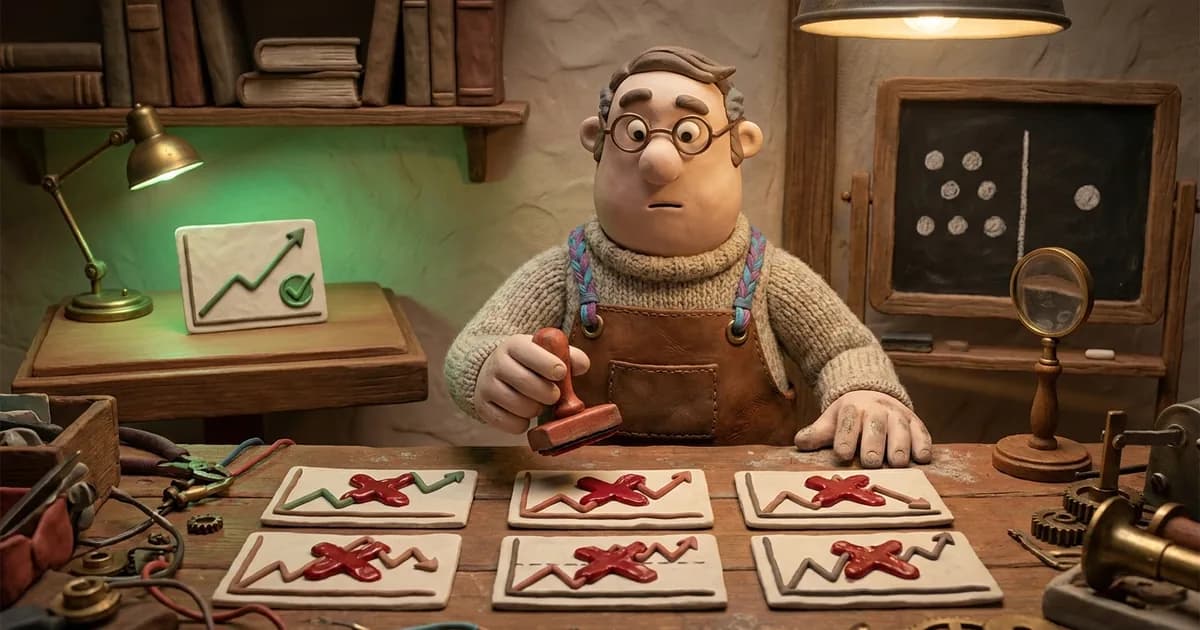
"What's your bot doing right now?"
"Nothing."
"Since when?"
"Since 184 days."
"And that's... good?"
"That's why I avoided a 36% loss."
I had this conversation last week with a colleague. And his face was priceless. Because "doing nothing" in the trading world sounds like a mistake. But sometimes "doing nothing" is the best decision a system can make.
In this article I'll explain:
- What a trading bot actually is (no jargon)
- Why I built one (the honest answer)
- The real advantages — and the real disadvantages
- And why a bot still isn't an ATM
Let's go.
What Is a Trading Bot?
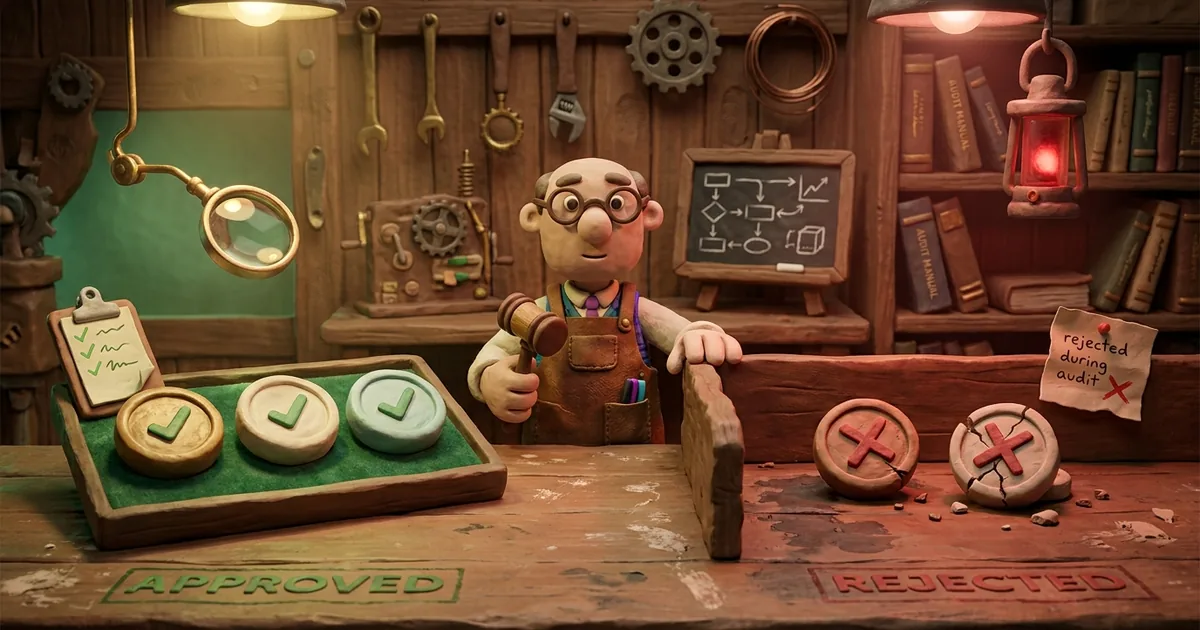
A trading bot is a program that automatically buys and sells — following fixed rules that you define BEFOREHAND.
Think of an alarm clock. You say: "Wake me at 6 AM." The alarm doesn't ask "Are you sure?" It doesn't ask "But it's Saturday!" It rings at 6 AM. Period.
A trading bot works the same way. You say: "Buy Bitcoin when conditions A, B, and C are met. Sell when any of them is no longer met." And the bot does exactly that. No discussion. No FOMO. No "but this time it's different."
What a bot is NOT:
- Not a magic algorithm that always makes money
- Not an AI that "predicts the market"
- Not a substitute for a good strategy
- Not a set-and-forget machine you switch on and walk away from
A bot is only as good as the rules you give it. Not better. Not worse.
Remember: A bot automates your strategy. It doesn't invent a strategy. If your rules are bad, the bot loses money systematically — just without emotions.
Why I Built a Bot
The honest answer: Because I make bad decisions at 3 AM.
I had 178,000 Swiss Francs on my screen. FARTBOY, a memecoin. And I didn't sell. Not because I didn't know better. But because my brain said: "What if it's 200,000 tomorrow?"
Three weeks later: 40,000.
That's when I understood: I'm good at analyzing. At testing. At developing strategies. But in the moment of decision — buy or not, sell or hold — I'm human. With fear. With greed. With FOMO.
A bot has none of that. It has rules. And it follows them.
The Real Advantages
1. No Emotions
This is the biggest advantage. And it sounds more trivial than it is.
Imagine: Bitcoin drops 15% overnight. Twitter screams "CRASH!" Your stomach turns. Every fiber of your body says: SELL. NOW.
The bot? Checks its three filters. All say: "Stay calm." So it stays calm.
Next day Bitcoin recovers 8%. You would have sold at the bottom. The bot did nothing.
This isn't a hypothetical example. This happened to me. Multiple times.
2. Active 24/7
Crypto markets never sleep. You do. Your bot doesn't.
It checks the signals every hour. Even Saturday night. Even on Christmas. Even when you're sick, on vacation, or making your kids breakfast.
3. Discipline
A bot ALWAYS follows the rules. It doesn't make an "exception trade." It doesn't think "this time might be different." It has no gut feeling.
That sounds like a weakness. But across 200 tested strategies I've learned: discipline beats intuition. Every time.
4. Reproducible
When you trade manually and make a profit — was it skill or luck? You don't know.
A bot does exactly the same thing, every time. Its results are MEASURABLE. You can backtest, optimize, improve. That's science, not hope.
The Real Disadvantages
Now it gets honest. Because a bot doesn't only have advantages.
1. The Bot Is Blind to Context
Your bot doesn't know that a pandemic just broke out. It doesn't know that Elon Musk just tweeted. It doesn't know the Fed is announcing a decision in 20 minutes.
It only sees its numbers. And if the numbers say "buy," it buys — even when common sense says "not today."
I solved this with MORE filters, not with manual overrides. But the risk remains.
2. Bad Strategy = Systematic Losses
This is the most dangerous disadvantage. If your rules are bad, the bot loses EVERY TIME. And it loses without hesitation. Without asking. Without noticing something is wrong.
That's why I tested 200 strategies before automating a single one. The bot is the last link in the chain — not the first.
Remember: A bot with a bad strategy is like a car without a steering wheel on the highway. It drives fast. But not where you want to go.
3. Technical Risks
Bots need servers, APIs, internet connection. If the server crashes, the API changes, or the internet goes down — the bot doesn't trade. Or worse: it trades WRONG.
I built a watchdog that checks every 17 minutes whether my bots are running. If one goes down, I get a Telegram message. But 100% uptime doesn't exist.
4. No Gut Feeling
Sometimes your gut says: "Something feels off." And sometimes it's right. A bot has no gut feeling. That's usually good — but not always.
When a Bot Makes Sense — and When It Doesn't
A bot makes sense when:
- You have a TESTED strategy (backtested over at least one full cycle)
- You're disciplined enough to let the bot do its thing (no manual overrides)
- You have the technical infrastructure (or can build it)
- You know that you make emotionally bad decisions
A bot does NOT make sense when:
- You don't have a tested strategy ("I'll just try something")
- You constantly override the bot ("But THIS TIME...")
- You think a bot = money printer
- You can't handle the losses when the bot is wrong
My 3 Bots
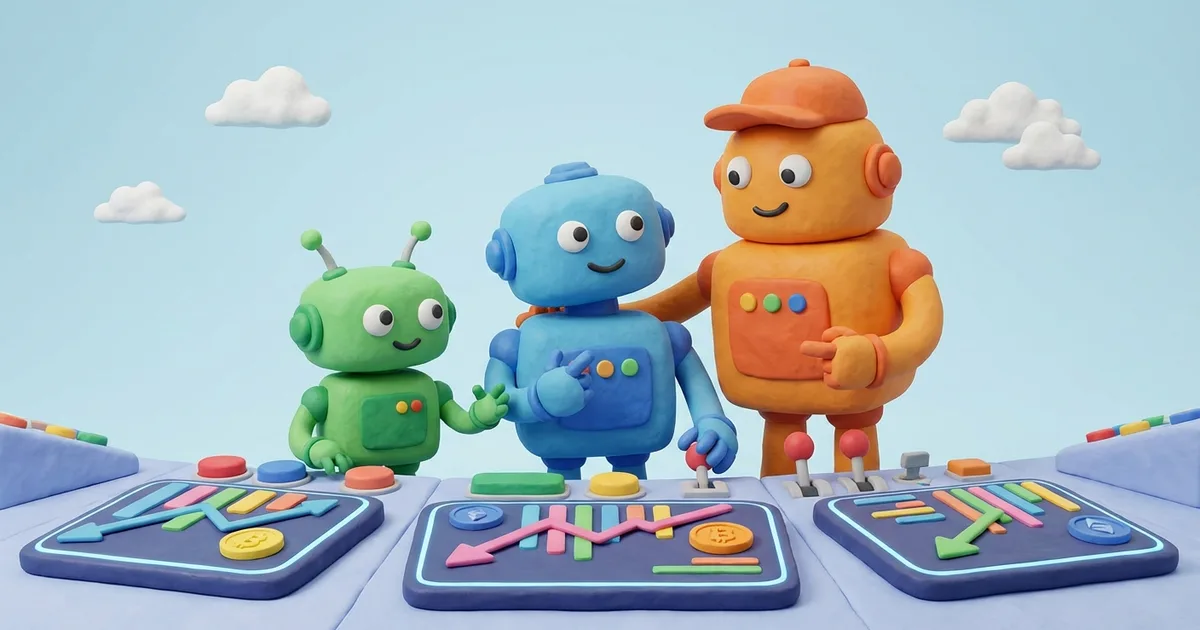
I don't have one bot. I have three. Each does something different:
The Watchdog — My main bot. Decides whether I'm invested in Bitcoin or in cash. Trades about 4x per year. Sits in cash 57% of the time. Has avoided every major crash.
The Scout — Uses the time while The Watchdog sits in cash. Looks for short-term breakout opportunities. Risks a maximum of 25% of capital. Faster, but controlled.
The Genius — My cleverest bot. Scans 22 DeFi protocols simultaneously with artificial intelligence and detects price-moving events. Running live.
The logic behind the three bots is explained in the newsletter. How they perform is on the Bots page.
What I've Learned
After 2 years of bot trading, I've learned a few things that aren't in any tutorial:
1. The bot is not the product. The strategy is the product. BUILDING the bot took 2 weeks. FINDING the strategy took 2 years. The ratio is 1:50.
2. The hardest moment is when the bot is "wrong." The bot sells at $43,000. Bitcoin then rises to $48,000. Your brain screams: "IDIOT BOT!" But three weeks later Bitcoin is at $30,000. The bot was right. You need the discipline to trust it — even when it hurts short-term.
3. Automation is humility. You admit: "I'm not good enough to do this manually." That's not a weakness. That's the smartest realization you can have as a trader.
Remember: Building a bot doesn't mean you're smart. It means you know where you're NOT smart.
→ The Watchdog: 184 Days of Doing Nothing — My main bot in detail
→ The Scout: Short-Term Opportunities — Opportunities during cash phases
→ The AI: Scanning the DeFi Market — My most experimental bot
→ DCA Savings Plan Calculator — What a savings plan would have returned
→ What's the Bot Saying Right Now? — Current signal
Your Dominic, the guy who admitted he makes bad decisions at 3 AM. And built a bot.
Disclaimer: This is not financial advice. A trading bot does not guarantee profits. Past backtest results do not guarantee future performance. Only invest what you can afford to lose.
Update 2026-04-28: Validation later showed only the SMA(100) filter actually changes the Watchdog's buy/sell decisions — DM and LD are tracked for transparency but don't gate trades. The story above is still accurate (the bot stayed in cash; the SMA filter did the work). Full validation: /blog/waechter-2021-loss. The Watchdog is now Tier 2, paper-tracking under our all-paper policy.