497 euros.
That's how much a trading course cost where the "Bollinger Band Squeeze Strategy" was sold as the holy grail.
The instructor showed a perfect chart: tight bands, breakout upward, 40 percent profit. "This works EVERY TIME," he said.
I tested it on 5 years of real Bitcoin data.
47 trades later I knew the truth:
+2.19%.
Not per month. Not per year. In five years.
Why Am I Telling You This?
Because Bollinger Bands are the perfect example of beautiful theory and terrible practice.
YouTube gurus love them. The colorful bands look professional. Everyone understands the concept. And the cherry-picked charts? Porn for trading beginners.
Reality is harsher.
In this article I'll show you:
- Why 47 "perfect" squeeze setups only made 2.19% profit
- What Bollinger Bands REALLY measure (Spoiler: not what you think)
- The ONE thing the bands can do -- and why it's not enough
Let's go.
The Squeeze Lie: My 47 Trades in Detail
The theory sounds airtight:
- Bollinger Bands get tight (low volatility)
- A "squeeze" forms
- Volatility explodes -> big move
- You buy the breakout
- Profit
Sounds logical, right?
Let's look at the numbers.
| Bollinger Band Squeeze Strategy (2019-2024) | Value |
|---|---|
| Number of trades | 47 |
| Winning trades | 20 |
| Losing trades | 27 |
| Win rate | 43% |
| Total profit | +2.19% |
| HODL in the same period | +49% |
43% win rate. With a coin-flip strategy you'd expect 50%.
The Bollinger Band Squeeze strategy is worse than random.
But wait. It gets worse.
The Fatal Thinking Error: Squeeze Doesn't Mean "Up"
Here's the reality check for your worldview:
Bollinger Bands ONLY tell you THAT a big move is coming. They don't tell you WHERE it's going.
Of my 47 squeeze breakouts:
- 23 went up
- 24 went down
That's like a weather expert saying: "Tomorrow the weather will change dramatically." Does that help you pick your outfit?
Nope.
Remember: Bollinger Band Squeezes are a thermometer. They show "something's happening" -- but not what.
Most traders interpret tight bands as "bullish." A fatal thinking error.
Bitcoin can just as easily explode downward.
Clear?
What Bollinger Bands REALLY Measure
Time for some straight talk.
Bollinger Bands consist of three lines:
- Middle line: 20-day Moving Average
- Upper/Lower bands: 2 standard deviations from the Moving Average
They measure volatility. Period.
Tight bands = low volatility Wide bands = high volatility
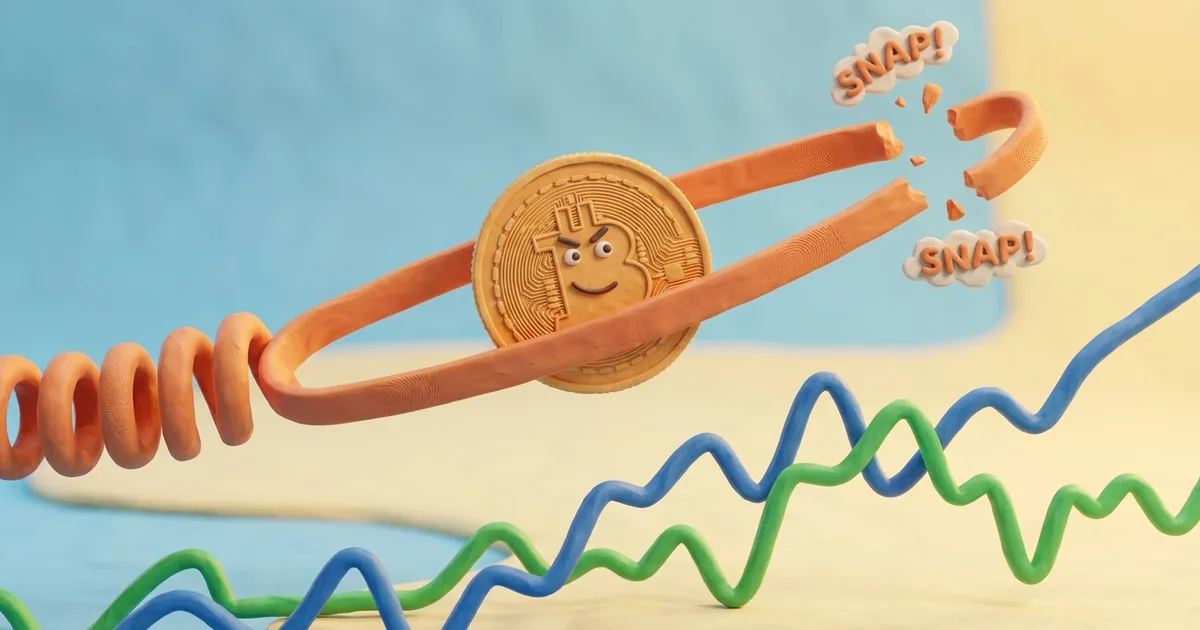
It's like a rubber band. Compress it, and it snaps back at some point. But in which direction? The rubber band won't tell you.
The YouTube guru turns this simple volatility measurement into a directional strategy. That's hocus-pocus.
Why Your Guru Won't Tell You This
Here's the uncomfortable truth:
Bollinger Band charts make killer YouTube thumbnails.
Colorful lines. Clear entries and exits. Perfect profits in hindsight.
Only: In hindsight, every strategy is perfect.
Forward testing? Nobody does that. Too boring.
I tested 295 different Bollinger Band variations:
- Different periods (10, 20, 50 days)
- Different standard deviations (1.5, 2, 2.5)
- Different filters and additional indicators
The result?
283 of them worse than HODL.
12 marginally better. But not enough to cover transaction costs.
Remember: Any indicator based on historical data is a weather forecast through the rear window.
The Only Use for Bollinger Bands
Are Bollinger Bands completely useless?
No. They have one purpose:
Volatility measurement.
If you're running an options strategy, tight bands can show you: "Movement incoming."
If you're adjusting your position sizing, wide bands can warn: "Careful, high risk."
But as a trading signal?
Garbage.
It's like a hammer for screws. The tool isn't bad. You're just using it wrong.
The Real Reason Bollinger Bands Don't Work
Bitcoin is not yogurt on sale.
Technical indicators work in markets with mean reversion. Markets that return to a "normal" value.
Bitcoin is a trending market.
It explodes upward or crashes downward. For months. For years.
Your Bollinger Bands say: "Bitcoin is oversold at $20,000." Bitcoin falls to $15,000.
Your Bollinger Bands say: "Bitcoin is overbought at $60,000." Bitcoin rises to $69,000.
The market doesn't give a damn about your bands.
What Actually Works Instead?
After 5 years of testing I can tell you: Momentum beats mean reversion.
What works for Bitcoin:
- Trend-following strategies
- Breakout strategies (but without Bollinger Bands)
- DCA with timing filter
Technical indicators? Only as confirmation. Never as the main signal.
The best strategy remains: HODL + selective DCA during real crashes.
Easy enough, right?
Your Next Steps
If you've been relying on Bollinger Bands: You're not alone.
I was one of them too. One of those who trusted colorful lines more than simple data.
The good news: You can change course.
Forget complex indicators. Focus on the basics:
- Understand market structure
- Manage risk
- Control emotions
That's more boring than Bollinger Band trading. But it works.
-> RSI: Why the Most Popular Indicator Fails -- The next indicator reality-checked
-> 200 Strategies Tested, 7 Mistakes Made -- All my lessons
-> Crash Recovery Calculator -- How much does BTC need to rise after a crash?
-> What Does the Bot Say Right Now? -- A signal based on data, not on bands
Your Dominic, the guy who tested 295 Bollinger Band strategies so you don't have to.