It's April 17, 2026. My colleague Sandra calls me at 9:47 PM.
"Dom, I did it again."
I know what "it" means. She sold NVIDIA. Again.
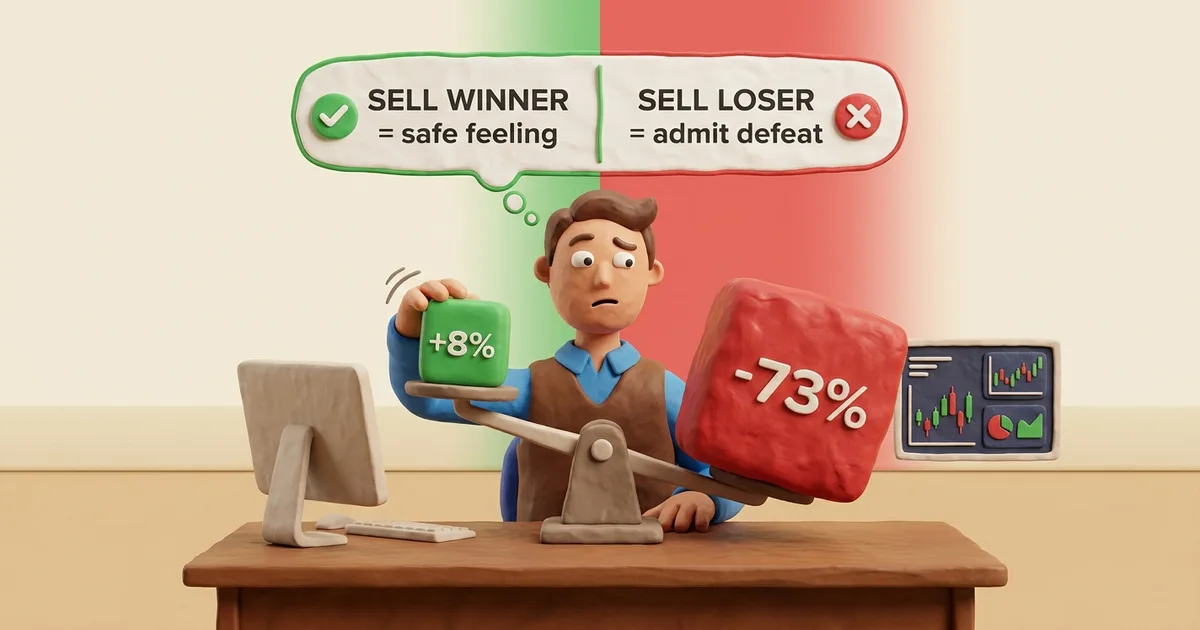
"At plus eight percent," she says. "I took the gains off the table. Safe move, right?"
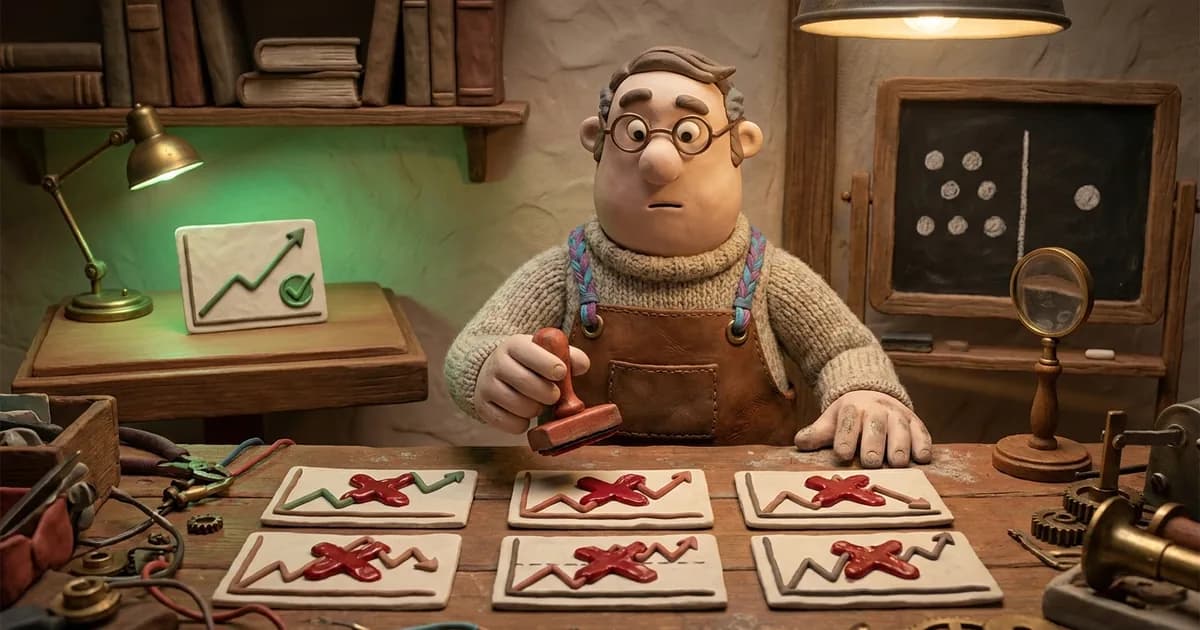
I checked the open positions in her portfolio she had NOT sold. Peloton: minus 73%. Beyond Meat: minus 81%. Rivian: minus 62%. All held for years. Never sold. "They might come back."
Her NVIDIA sale: she bought 9 months ago. Closed it for +8%. NVIDIA is now up 340% from her sale price.
Mathematical outcome: she kept the losers that kept losing and sold the winner that kept winning. Her brain told her this was "risk management." It was the exact opposite.
This is loss aversion. The single most expensive bias in retail trading. Kahneman and Tversky won a Nobel Prize for documenting it. Odean studied 10,000 real brokerage accounts and confirmed it in live data. It affects you. It affects me. It affected Sandra. And it costs us billions per year collectively.
Here's what's happening, why your brain does it, and what mechanical rules can actually fix it.
The Brain Math
In 1979, Kahneman and Tversky asked thousands of subjects two questions:
Question 1: Would you take a coin flip that pays +$100 on heads, -$100 on tails?
Answer: almost nobody would. Expected value is zero; people refuse to play.
Question 2: What does the payoff have to be for you to accept a -$100 tails?
Answer: most people required +$200 or more on heads to take the bet.
The ratio: losses feel roughly twice as painful as equivalent gains feel good. Call it the 2:1 rule. It's been replicated thousands of times across cultures, income levels, and ages. It shows up in neuroimaging — different parts of your brain light up for losses than for gains, and the loss regions fire harder.
This is a pre-rational, hardwired asymmetry. You can't argue it away. You can only build systems that work around it.
How +$100 and −$100 actually feel
Kahneman & Tversky, 1979. Replicated thousands of times. Losses feel ≈ 2× as intense as equivalent gains.
The curve is asymmetric on purpose: the line below zero drops ~2.25× faster than it rises above. That's why Sandra sold NVIDIA at +8% (small win = safe, take the cookie) but held Peloton at −73% (realizing the loss = unbearable). Same person. Same math. Asymmetric pain.
What Loss Aversion Does to Real Portfolios
Terry Odean at Berkeley studied 10,000 retail brokerage accounts from 1987-1993. Real trades, real money. He found:
- Investors are roughly 50% more likely to sell a winning position than a losing position on any given day.
- The winners they sold went on to outperform the losers they held.
- If they had done the opposite — sold losers and held winners — they would have earned an extra ~4.4% per year.
Four percent per year. For 30 years of compounding, that's the difference between "a nice retirement" and "working until 75."
This is not an intellectual failure. Sandra could explain loss aversion to you better than I can. She has a spreadsheet. She knows the statistics. And she still sold NVIDIA at +8% because closing a winner feels safe, and closing a loser feels like admitting defeat.
The feeling bypasses the analysis. Every time.
The Three Stories Loss Aversion Tells You
Your brain doesn't say "I'm being irrational right now." It invents plausible-sounding stories.
Story 1: "Take profits. Never went broke taking profits."
The quote is true. But it's a justification for cutting winners short, which is exactly the behavior that destroys compounding. You "never went broke" selling NVIDIA at +8%. You also never got rich.
Compounding requires letting winners run until their thesis breaks. Selling at +8% because "gains are gains" is pure loss aversion wrapped in a Wall Street cliche.
Story 2: "It'll come back. Bought it for a reason."
This is the mirror image — the excuse you tell yourself for holding a loser. The thesis may have been valid when you bought. That doesn't mean it's valid now.
If you wouldn't BUY the position today at the current price, you shouldn't HOLD the position today at the current price. They're economically identical decisions. Loss aversion makes them feel different.
Story 3: "I don't want to take the tax hit."
Tax loss harvesting is real. But most people invoke taxes as an excuse to hold losers, not to actually optimize taxes. A -40% position has a tax-loss value. Realizing it offsets other gains. Yet retail investors hold because "selling locks in the loss" — treating realization as the damage event, when the market already did the damage months ago.
My Own Version: The BTC I Never Sold at $30k
Spring 2022. Bitcoin had peaked at $69k in November 2021 and dropped to $30k. I had bought between $45k and $62k, average cost around $51k. Down 41%.
My thesis when I bought: "Institutional adoption is inevitable. $100k is conservative."
My analysis in April 2022: "Institutional adoption is stalling. Terra/Luna is imploding. Fed is raising rates aggressively. This could get much worse."
What I did: held. All of it. Said I was "conviction HODLing."
What I was actually doing: loss aversion. Selling at -41% would make the loss real. The loss-averse part of my brain decided "hold" was the safer emotion. It wasn't the safer decision — it was the safer feeling.
BTC went to $15k that November. My position was down 70%+. I still didn't sell. I told myself I was "a diamond hand." I was a guy whose emotions had hijacked his process.
It recovered — we're above the 2021 peak now. So it looked okay in hindsight. But loss aversion told me to hold, and I was right by luck, not by process. In another scenario, the same decision destroys half my net worth.
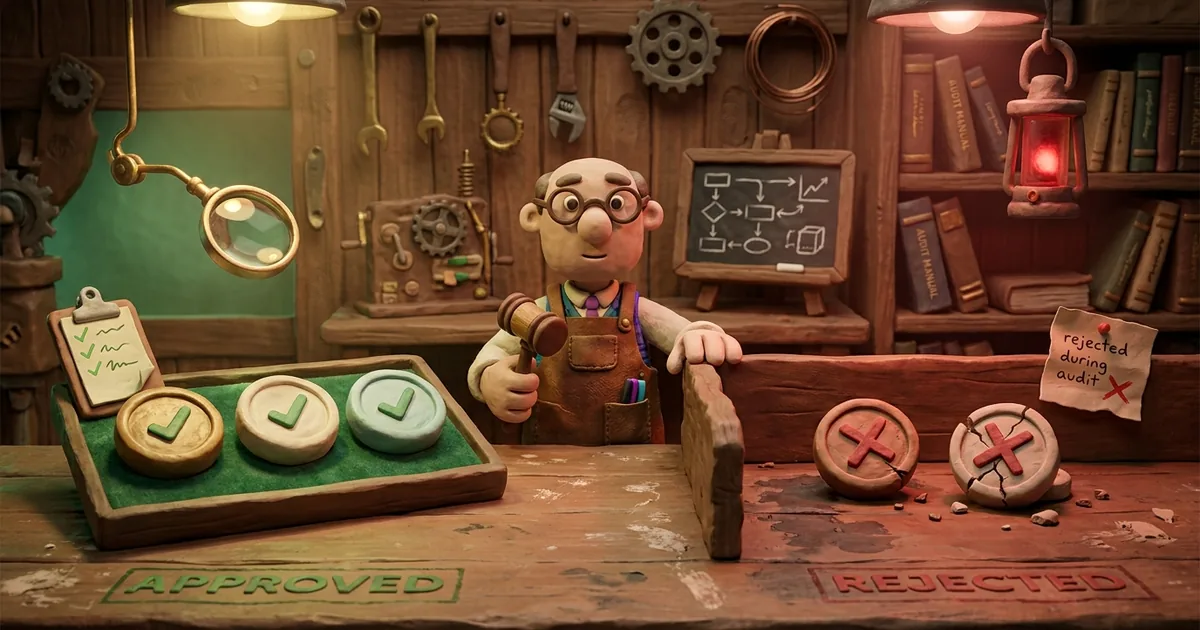
This is why The Watchdog exists. It doesn't feel anything. When DM+LD says CASH, it sells. When DM+LD says BUY, it buys. It will never invent "diamond hand" stories. That's its competitive advantage over me.
The Mechanical Fix
You can't remove loss aversion. You can bypass it.
Pre-commit your exits before you enter
Before every trade, write down:
- Price target (or conditional target): at what price or condition do you sell for a win?
- Stop loss (or thesis break): at what price or condition do you sell for a loss?
- Time stop: if neither triggers by [date], what do you do?
Write it BEFORE you buy, when you're calm. Execute it WITHOUT thinking when the trigger hits. Your past-self is more rational than your in-the-moment-self.
Every one of our live bots operates on pre-committed rules. That's not because the rules are genius. It's because the rules are decided in advance, which is the only way to get past loss aversion.
Trade journal with reason-at-entry vs outcome
For every trade, log:
- Date + ticker + size
- Thesis (one sentence)
- Exit criteria (price, time, event)
- Actual exit (date, price, reason)
After 30-50 trades, the pattern becomes obvious. You'll see your average winning-trade holding period is 6 weeks and your average losing-trade holding period is 10 months. That gap IS loss aversion, quantified in your own data.
Once you see it in your own numbers, you can't unsee it. That's the first step to fixing it.
The "Would I Buy Today" test
For every position you hold that's down more than 20%: ask yourself, "If I had cash today, would I BUY this position at the current price with today's information?"
If yes: hold. If no: sell.
That's it. If holding is better than buying, loss aversion is making the decision for you. A rational holder and a rational buyer should make the same call at the same price. If they diverge, you're feeling, not thinking.
The Sandra Test
After our call, Sandra tried the "would I buy today" test on her losing positions.
- Peloton at -73%: "No. The business model is broken."
- Beyond Meat at -81%: "No. Competition has destroyed the narrative."
- Rivian at -62%: "Maybe? Ask me after next earnings."
She sold Peloton and Beyond Meat the next morning. The tax loss offset half a year of gains. She felt "weirdly terrible" about it for two days, then fine.
That "weirdly terrible" feeling IS the loss aversion pain, released. She just paid the price her brain had been dodging for 18 months. The position was already gone; she just acknowledged it.
Two months later, both positions were lower. She'd saved herself another 15%.
The Uncomfortable Takeaway
You are loss-averse. You'll sell winners too early. You'll hold losers too long. You'll invent stories both ways.
The fix is not "be more rational." It's "let a system decide, not you in the moment."
Either:
- Write down your exits before you enter, and execute them mechanically.
- Let a mechanical trading bot make the decisions you can't make without loss aversion contaminating them.
The Watchdog sells at BTC cycle breakdowns without caring about cost basis. The Tactician flips in and out on 30-day momentum without loss aversion friction. Neither bot has ever held a position past its signal because "it'll come back."
That's not because the bots are smart. It's because they don't have loss aversion. Neither should your trading plan, even if you can't surgically remove it from your own brain.
Related reading:
- Behavioral Biases Pillar — all 12 biases that wreck retail portfolios
- Beat HODL or Don't Bother — the benchmark your strategy must clear
- FOMO: The $140k Tax — loss aversion's expensive twin
- The Watchdog post-mortem — the bot that doesn't feel anything
Not financial advice. This article is educational. Your results will vary. Past performance does not guarantee future results.