A few months ago, a crypto blogger took his own life.
I didn't know him personally. But I'd read his posts. Bullish on everything. Leveraged. All-in. His portfolio was his identity. And when the portfolio went to zero, he went with it.
I'm not writing this article lightly. It's the hardest piece on this entire website. But I believe it needs to be written. Because in the crypto world everyone talks about gains — and nobody talks about what losses do to people.
In this article:
- The illusion crypto sells — and the reality behind it
- What happens when trading becomes an addiction
- Warning signs you should know
- And where to find help when things get serious
Important: If you're in a crisis right now — scroll to the bottom. You'll find phone numbers there.
The Illusion
You know the images. Instagram: 22-year-old with a Lamborghini. YouTube: "I turned $100 into $1M." Twitter: rocket emojis under every pump.
That's the facade. The billboard. The filter.
What you DON'T see:
- The guy staring at the chart at 3 AM, for weeks
- The woman lying to her husband about the losses
- The student who leveraged his tuition money and doesn't know how to pay rent
- The father secretly trading on the toilet because he's ashamed
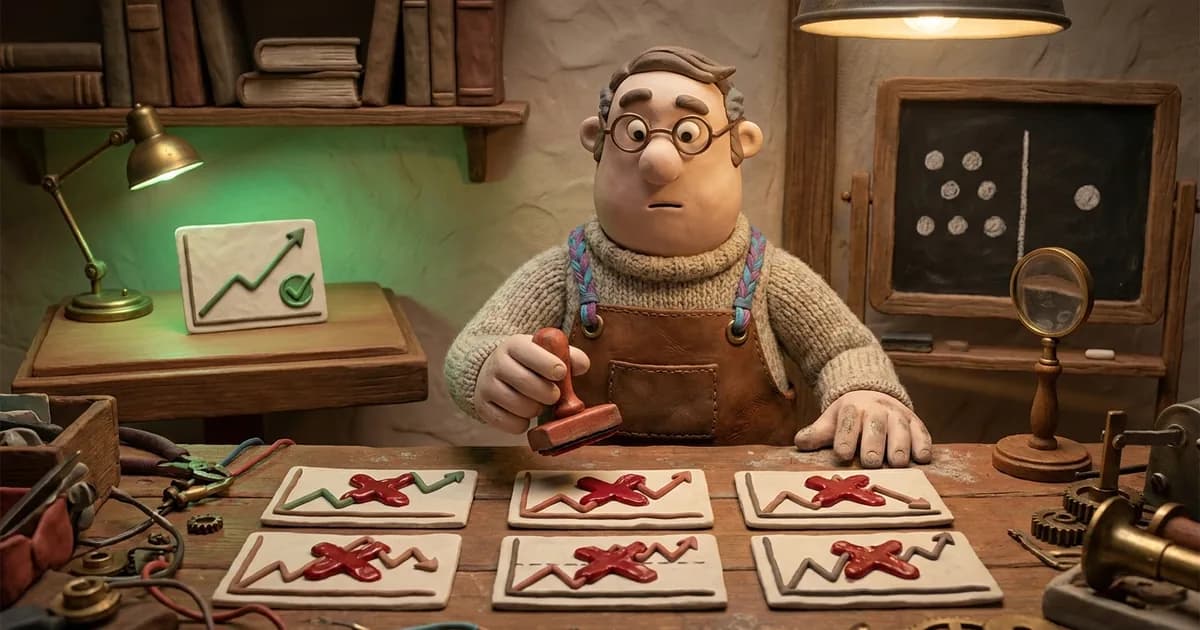
These aren't fringe stories. A 2024 study of 487 crypto investors found that FOMO and gambling-addiction-like scores were the strongest predictors of financial and psychological harm. Not knowledge. Not experience. The addiction.
Why Trading Is Addictive
This isn't a metaphor. It's neuroscience.
Dopamine — the addiction chemical
When you make a trade and win, your brain releases dopamine. That's the same chemical activated by slot machines, sports betting, and drugs.
But here's the trick: studies show that dopamine release is HIGHEST when the outcome is UNCERTAIN — not when you win. Your brain gets addicted to the SUSPENSE, not the profit.
That's exactly why:
- You open the app at 3 AM — to CHECK
- You make the next trade immediately after a loss — "Revenge Trading"
- You feel empty when you're NOT trading — withdrawal
Trading apps amplify this: push notifications. Green and red numbers. Confetti on wins. These are ADDICTIVE DESIGN PATTERNS — the same techniques casinos use.
Crypto is worse than stocks
Why? Three reasons:
- 24/7 market: No closing bell. No break. The market never sleeps — so YOU never sleep.
- Leverage: You can trade at 10x or 100x. A 5% move becomes a total wipeout. The extremes are MORE EXTREME.
- Anonymity: Nobody sees what you're doing. No advisor. No bank employee asking "Are you sure?" Just you and your phone.
When Trading Becomes Your Identity
This is the most dangerous point. And it happens gradually.
At first: "I trade a bit of Bitcoin." After 6 months: "I'm a trader." After 12 months: "My portfolio is my worth."
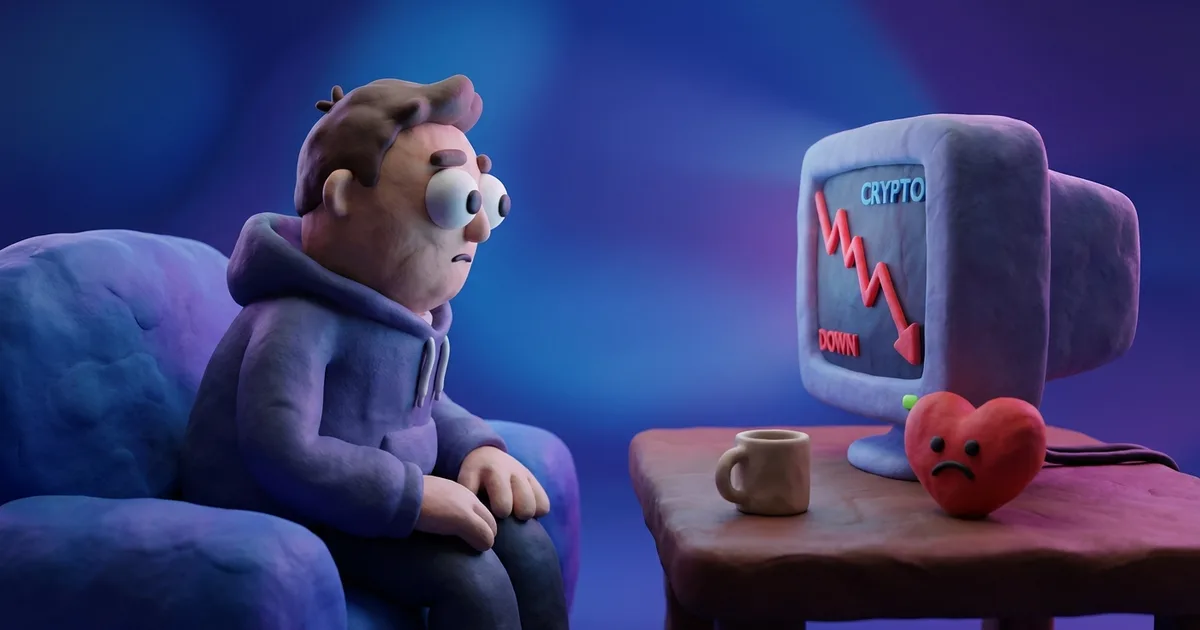
When your self-worth depends on your portfolio balance, something toxic happens: a crash is no longer a financial loss. It's a PERSONAL failure. You're not losing money — you're losing yourself.
Studies show: among crypto traders who suffered severe losses, MULTIPLE reported depression and one reported suicidal thoughts — in a single small-sample study. Business Insider reported a 22% increase in crypto-related anxiety disorders and self-harm worldwide in 2024.
These aren't abstract numbers. These are people.
Warning Signs — In Yourself
Read this list honestly. Not as "that's other people." As: "Is that me?"
Financial:
- You're trading with money you actually need (rent, food, tuition)
- You're borrowing money to trade
- You're trying to "win back" losses with bigger bets
- You're hiding your losses from your partner/family
Emotional:
- Your mood depends directly on the portfolio — green = good day, red = bad day
- You feel panic when you can't check the app
- You can't sleep because you're thinking about open positions
- You feel empty or depressed when you're not trading
Social:
- You're withdrawing — fewer friends, fewer hobbies
- You're lying about your trading ("I'm just doing a little")
- Your partner brought it up and you brushed it off
- Trading is the only thing you talk or think about
Remember: If you recognize yourself in 3 or more of these points, take it seriously. This isn't a "discipline problem." It could be an addiction.
Warning Signs — In Friends and Family
- Sudden mood swings explained by "the market"
- Secrecy about finances — gets defensive when asked
- Sleep problems, constant phone-checking
- Withdrawal from social activities
- Big promises ("I'll be rich soon") followed by silence
- Sudden optimism AFTER losses ("I'll win it back")
If you see this in someone: Talk to them. Not accusatory. Not preachy. Simply: "Hey, I'm worried about you. How are you really doing?"
Sometimes that's enough.
What Healthy Trading Looks Like
I trade myself. Every day. But I have rules — not just for the bot, but for ME.
1. Only invest money I can afford to lose My initial investment is out. What's in crypto is play money. If it's gone tomorrow, my life doesn't change.
2. No checking the phone at night The bot sends me a Telegram message when something changes. I don't need to stare at the chart at 3 AM. When it writes, I check in the morning.
3. No leverage Never. My bot trades BTC spot. No leverage. No liquidation risk. No "everything gone in 5 minutes."
4. No identity from the portfolio I'm a physics teacher. Father. Husband. THEN crypto investor. In that order.
5. Automate what you can The main reason I built a bot: so that I don't make the decisions. The bot has no addiction. No FOMO. No revenge trading.
Where to Find Help
If you're in an acute crisis:
🇨🇭 Switzerland:
- Die Dargebotene Hand: 143 (24/7, anonymous)
- National Gambling Helpline: 0800 040 080 (24/7, free)
- SOS-Spielsucht: sos-spielsucht.ch (online counseling)
- SafeZone: safezone.ch (anonymous online counseling)
🇩🇪 Germany:
- Telefonseelsorge: 0800 111 0 111 or 0800 111 0 222 (24/7, free)
- BZgA (Federal Centre for Health Education): 0800 1 37 27 00
🇦🇹 Austria:
- Telefonseelsorge: 142 (24/7, free)
- Spielsuchthilfe Wien: spielsuchthilfe.at
🌍 International:
- Crisis Text Line: Text HOME to 741741 (US)
- Samaritans: 116 123 (UK, 24/7, free)
- International Association for Suicide Prevention: https://www.iasp.info/resources/Crisis_Centres/
For people affected by trading addiction:
- Addiction counseling centers treat trading addiction the same as gambling addiction
- The first step: a conversation. Anonymous. Free. Without judgment.
Why I Wrote This Article
I had 178,000 Swiss Francs (CHF) on the screen and didn't sell. I stared at charts through the night. I felt the FOMO. The adrenaline. The pull.
I was lucky: my family and my job kept me grounded. And eventually I built a bot. Not because I'm particularly smart, but because I realized that I MYSELF can't trade without emotions.
To everyone who feels spoken to: please get help. It's not weakness. It's the smartest decision you can make.
→ How I Didn't Sell 178,000 — What FOMO really costs
→ My Rule #1: Take Out What I Put In — So you sleep better
→ Bot Trading Explained — Why I automated my decisions
→ The Sad Daytrader Statistics — Why 97% lose
→ What's the Bot Saying Right Now? — Current signal
→ Our 3 Bots — Systems without emotions
Your Dominic.
Sources
- Cryptocurrency Trading and Associated Mental Health Factors — Scoping Review (2025, PMC)
- The Harmful Consequences of Cryptocurrency Speculation — Springer (2024)
- "Buy High, Sell Low": Cryptocurrency Traders Who Experience Harm — PMC (2023)
- How Gambling Disorder Parallels Investing Addiction — UCLA Health
- Dopamine and Gambling Disorder — PMC
- SOS-Spielsucht Schweiz
- SafeZone.ch — Anonymous Online Counseling
This article is not medical or psychological advice. If you need professional help, please contact the resources listed above.